Gemba Walks for the AI Age
Dashboards are useful. They are not the work. A beginner-friendly guide to Gemba walks, what leaders should observe, and how AI can help close the loop without replacing human judgment.
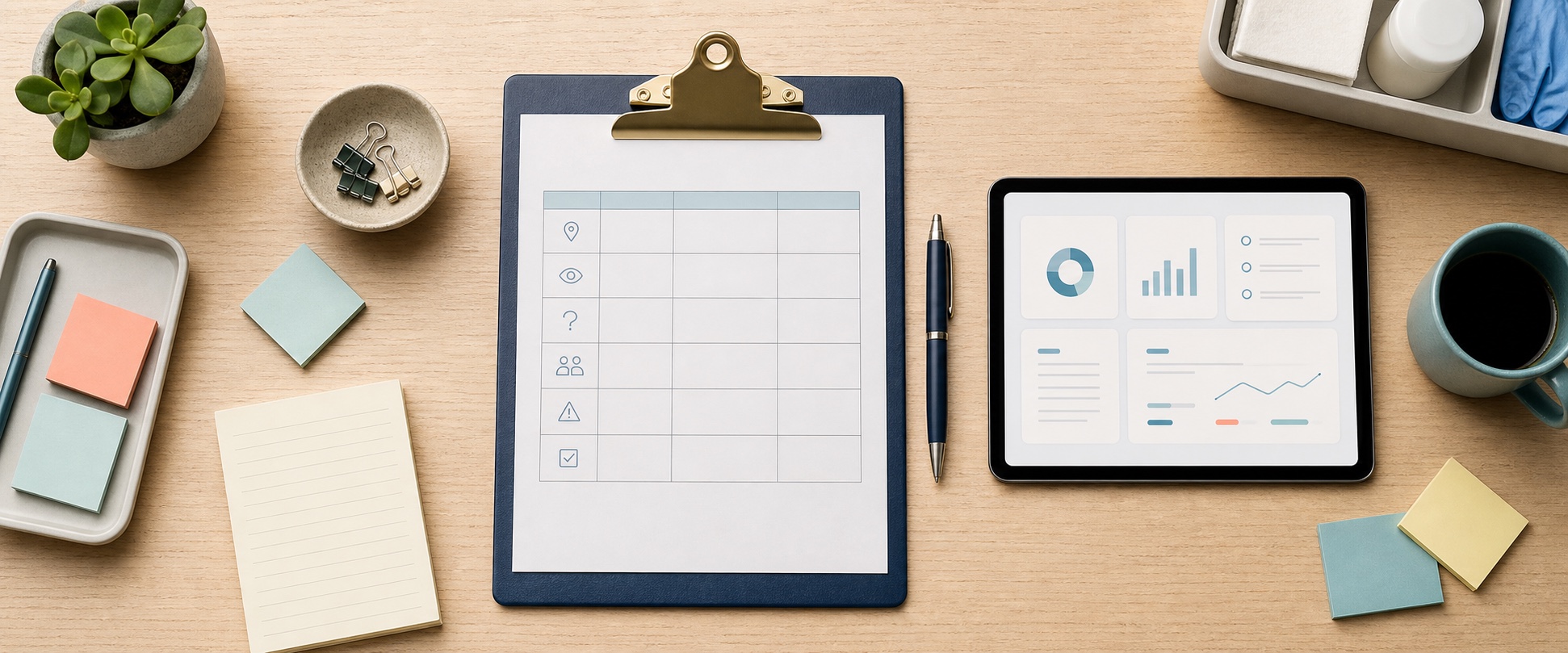
Most leaders do not have a visibility problem. They have dashboards, reports, ticket queues, scorecards, inboxes, and meeting notes.
The problem is that all of those are secondhand versions of the work.
A dashboard can tell you a process is late. It cannot always show you the extra login, missing supply, unclear handoff, or quiet workaround causing the delay. For that, someone has to go to the place where the work actually happens.
That is the simple idea behind a Gemba walk.
The plain-English definition
Gemba means the actual place. In Lean practice, it means the place where value is created.
In a factory, the Gemba might be the production floor. In healthcare, it might be the patient care unit, operating room, medication room, or front desk. In software, it might be the codebase and the real workflow around shipping changes.
The Lean Enterprise Institute describes a Gemba walk as a way to understand the current situation through direct observation and inquiry before taking action.
A Gemba walk is not "walking around." It is going to the actual place, observing the real work, asking respectful questions, and turning what you learn into follow-through.
What a Gemba walk is not
The word can sound like a special operations ritual. It is not. The practice is easy to understand and surprisingly easy to misuse.
If people feel inspected, they will hide the workarounds you need to understand.
If you show up, nod, and disappear, the walk becomes theater instead of improvement.
If you solve the first thing you see, you may miss the system issue causing it to happen again.
The better posture comes from the Lean phrase often tied to Toyota leadership: go see, ask why, show respect.
Even there, the order matters. First observe what is happening. Then ask why. Then work with the people closest to the process on what should change.
Why this matters more with AI
AI is excellent at working with the artifacts around a business: documents, transcripts, spreadsheets, tickets, policies, emails, and reports. That is useful, but it creates a new risk.
If we only feed AI the polished version of the process, it will optimize the polished version of the process.
That is where Gemba and AI belong together. Gemba gives you reality. AI helps preserve, structure, compare, and follow up on what reality reveals.
Where AI can actually help
The best use of AI is not replacing the leader on the walk. It is reducing the documentation drag after the walk.
- Capture: Turn short voice notes into clean, de-identified observations.
- Structure: Separate facts, questions, risks, owners, and possible countermeasures.
- Memory: Compare this walk with previous walks to spot repeated patterns.
- Follow-through: Draft action items, due dates, and huddle agendas so the loop does not quietly die.
- Coaching: Prompt leaders to ask what is happening before jumping to why or how to fix it.
That last point is bigger than it looks. A good AI assistant should not simply make the leader faster. It should make the leader more disciplined.
Where AI should stay in its lane
AI should not become surveillance. It should not quietly record people, scoop up sensitive information, or turn frontline candor into a compliance trap.
Healthcare makes this boundary obvious. A patient care area is full of privacy obligations, power dynamics, stress, and protected information. An AI-supported Gemba workflow in that environment needs guardrails from the beginning:
- No protected health information by default.
- De-identified operational examples only.
- Human review before summaries become records.
- Clear purpose: improve workflow, not grade individuals.
- Visible follow-up so staff know what changed because they spoke up.
The 2023 BMJ Open Quality review of leadership walkarounds found positive association with operational and cultural outcomes, while also noting that clinical-outcome evidence is more limited. The practical lesson is straightforward: the walk only earns trust when feedback and follow-through are real.
A starter walk for this week
If you lead a team, do not start with a platform. Start with a 20-minute walk.
- Pick one workflow. Choose something specific: intake, handoff, approval, onboarding, issue triage, reporting.
- Tell people why you are there. Make it clear you are observing the process, not inspecting individuals.
- Watch the work happen. Look for waiting, duplicate entry, unclear ownership, rework, missing context, and handoff friction.
- Ask three questions. What is supposed to happen here? What actually happens? What makes this harder than it needs to be?
- Close one loop. Leave with one owner, one next step, and one date to report back.
Then, and only then, use AI to help turn your notes into a summary, action list, and follow-up message. The AI should support the discipline you already practiced in person.
Three takeaways for leaders
- The dashboard is not the work. It is a useful signal, but the truth still lives where the work happens.
- AI should preserve the walk, not replace it. Use it for capture, structure, pattern recognition, and follow-through.
- Trust is the operating system. If the walk feels like surveillance, the most important truth will disappear.
The future of Gemba is not a robot walking the floor. It is a better human walk supported by better memory.
Go see. Ask better questions. Show respect. Then use the machine to make sure what you learned does not vanish into the clipboard graveyard.
Grounding notes: This 100-level entry is grounded in Not A Dev's Gemba research foundation, the companion Medium draft, Lean Enterprise Institute guidance, and healthcare walkaround evidence from BMJ Open Quality.
Want help turning observation into an AI workflow? Not a Dev builds approachable AI starter kits, training tracks, and managed delivery for teams ready to move from notes to operating systems.
Request private preview →